Products
  • Delivery time estimated upon order
  • Log in to download solid step files
  • Global shipping

What makes hygienic design easier to clean?

Small details in component design can make a significant difference when equipment needs to be cleaned.

Smooth surfaces, sealed joints and accessible geometries are fundamental principles of hygienic design, while exposed threads, gaps and crevices can create areas that are more difficult to reach during cleaning.

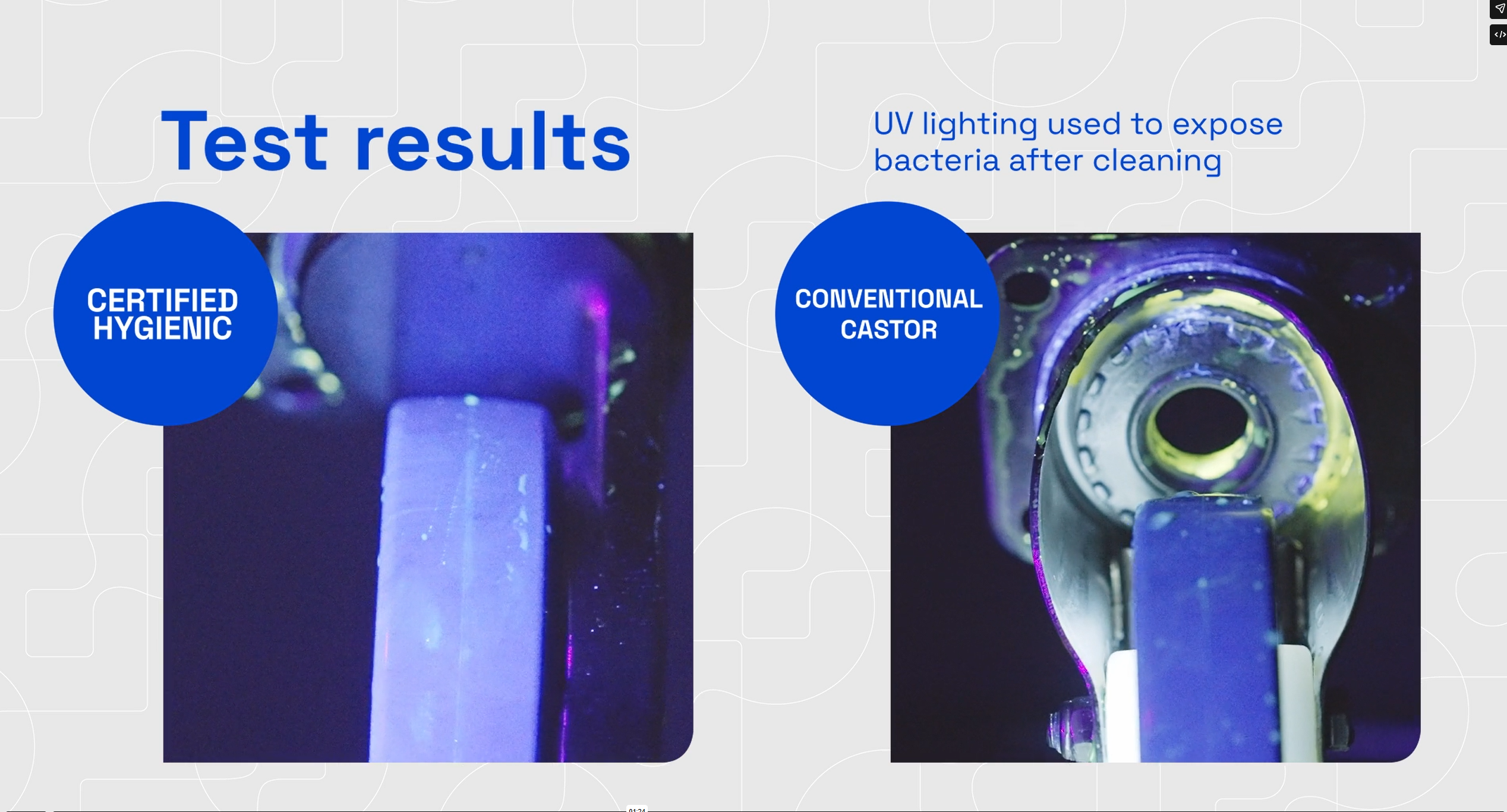
A simple visual demonstration

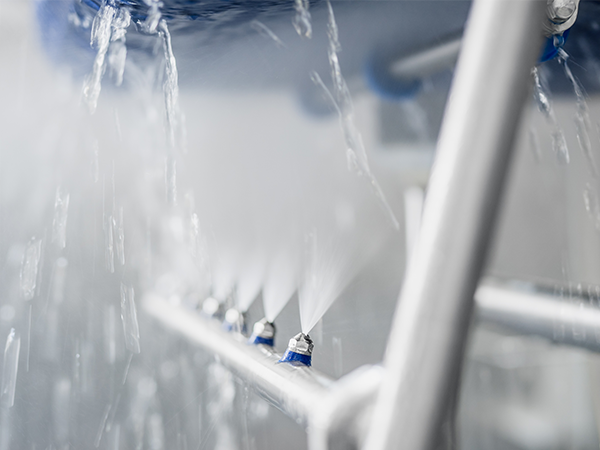
Our visual demonstration illustrates some of the differences between conventional and hygienically designed components when exposed to cleaning.

The demonstration illustrates the principle of hygienic design. It is not a controlled washdown test and does not represent an actual food production environment.

The principles behind it, however, are something we have put to the test.


Together with FORCE Technology, NGI has conducted washdown testing to examine how component design can affect cleaning.
Explore the individual tests below and see how hygienic design principles translate into actual component design.


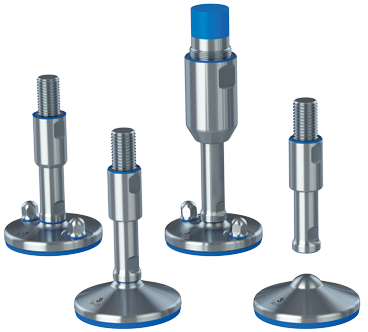
Hygienic vs. conventional levelling feet

Exposed threads, joints and other hard-to-reach areas can make cleaning around levelling feet more challenging.

See how hygienic and conventional levelling feet compare under controlled washdown testing.

See the levelling feet washdown test below.


Download the FORCE Technology washdown test

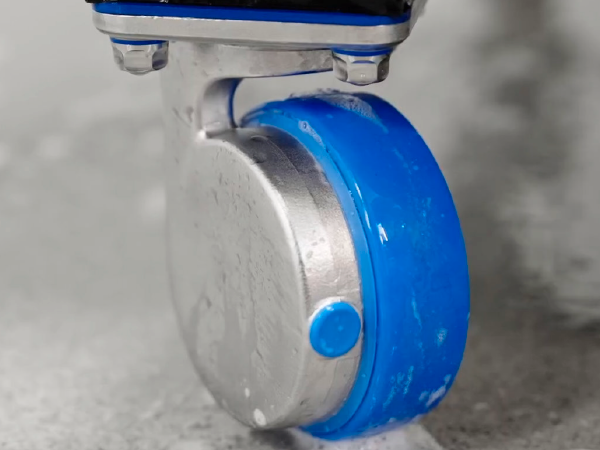
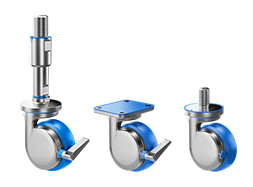
Hygienic vs. conventional castors

Castors bring together several surfaces, joints and moving parts, making component design particularly relevant when it comes to cleaning.

See how hygienic and conventional castor designs compare under controlled washdown testing.

See the castor washdown test below.

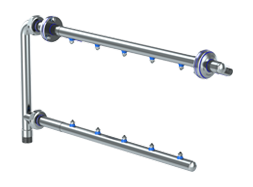
CIP Unit - Cleaning where access is limited

Not every area of a machine is equally accessible for manual cleaning. The CIP Unit addresses a different aspect of hygienic equipment design by enabling cleaning in areas where access can be challenging.

See the CIP Unit in a controlled washdown test and take a closer look at how the solution works.

See the CIP Unit washdown test below.

Download the FORCE Technology washdown test

Explore hygienic solutions

From levelling feet and castors to cleaning solutions for conveyor systems, hygienic design comes down to the details.

Explore the solutions featured in our washdown tests.

Different components. The same attention to hygienic design

Levelling feet, castors and CIP solutions perform different functions, but they are all part of the equipment that needs to support effective cleaning.

Hygienic design therefore goes beyond the choice of a single component. It is about considering the details throughout the equipment that can influence accessibility and cleaning.

Key design considerations include:

  • Smooth and self-draining surfaces
  • Sealed joints
  • Fewer gaps and crevices
  • Reduced exposed threads
  • Accessibility for cleaning
  • Materials and geometries suited for hygienic environments

Exploring possibilities since 1972 with ...

Want to take a closer look at your equipment?

Talk to us about your application and how hygienic component design can support your equipment and cleaning requirements.


Book a meeting with NGI

Anders Kjær
Anders Kjær
Sales & Team leader

Components

+45 38 41 75 27

+45 29 81 10 17

akj|ngi-global.com

Jacob Trolldenier
Jacob Trolldenier
Sales

Components

+45 96 32 75 48

+45 60 13 37 43

jat|ngi-global.com

Lee Morrison
Lee Morrison
Sales - locally

Components

+44 77 30 59 08 55

lmo|ngi-global.com

Nicolaj Claesen Mathiesen
Sales & Team leader

Components

+ 45 96 32 75 58

+45 22 15 90 01

nma|ngi-global.com

Oleksandr Gerasymovych
Business Team Manager & Sales

Components

+45 96 32 75 79

+45 30 95 81 93

og|ngi-global.com